
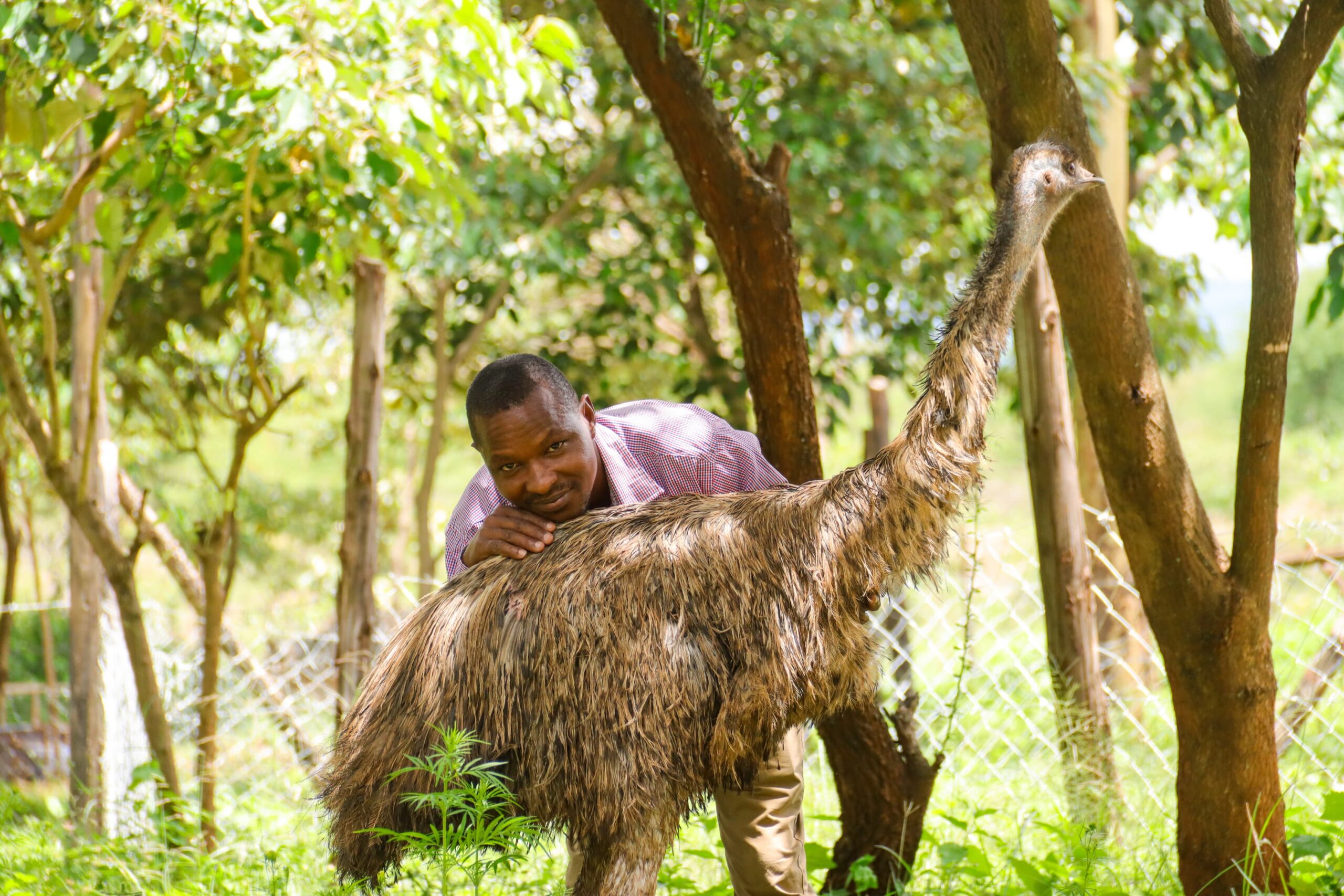
Most Kenyans have never seen an emu in person. Most never will — because Kenya has very few of them. That is something Makoyo Village is working to change, one hatch at a time.
The emu is the world’s second-largest bird by height, native to Australia but present in small numbers in parts of Africa through conservation and private breeding programmes. They are ratites — a family of large, flightless birds that also includes ostriches, rheas, cassowaries, and kiwis. Standing up to 1.9 metres tall, emus are prehistoric in appearance and surprisingly gentle in temperament. Fast — capable of running at 50 kilometres per hour — and deeply curious.
Semi-arid environments suit ratites well. Makueni County’s climate, with its open dryland landscape and warm temperatures, creates viable conditions for both ostriches and emus. Makoyo Village began its ratite conservation programme with ostriches and expanded to emus specifically because of how rare they are in Kenya.
Our goal is not just to keep them — it is to breed them, study them, and demonstrate that community-based conservation of rare species is viable in rural Kenya.
For many students visiting Makoyo Village, it is the first time they have ever seen an emu. We think that matters. Children who encounter rare wildlife up close grow into adults who care about protecting it.